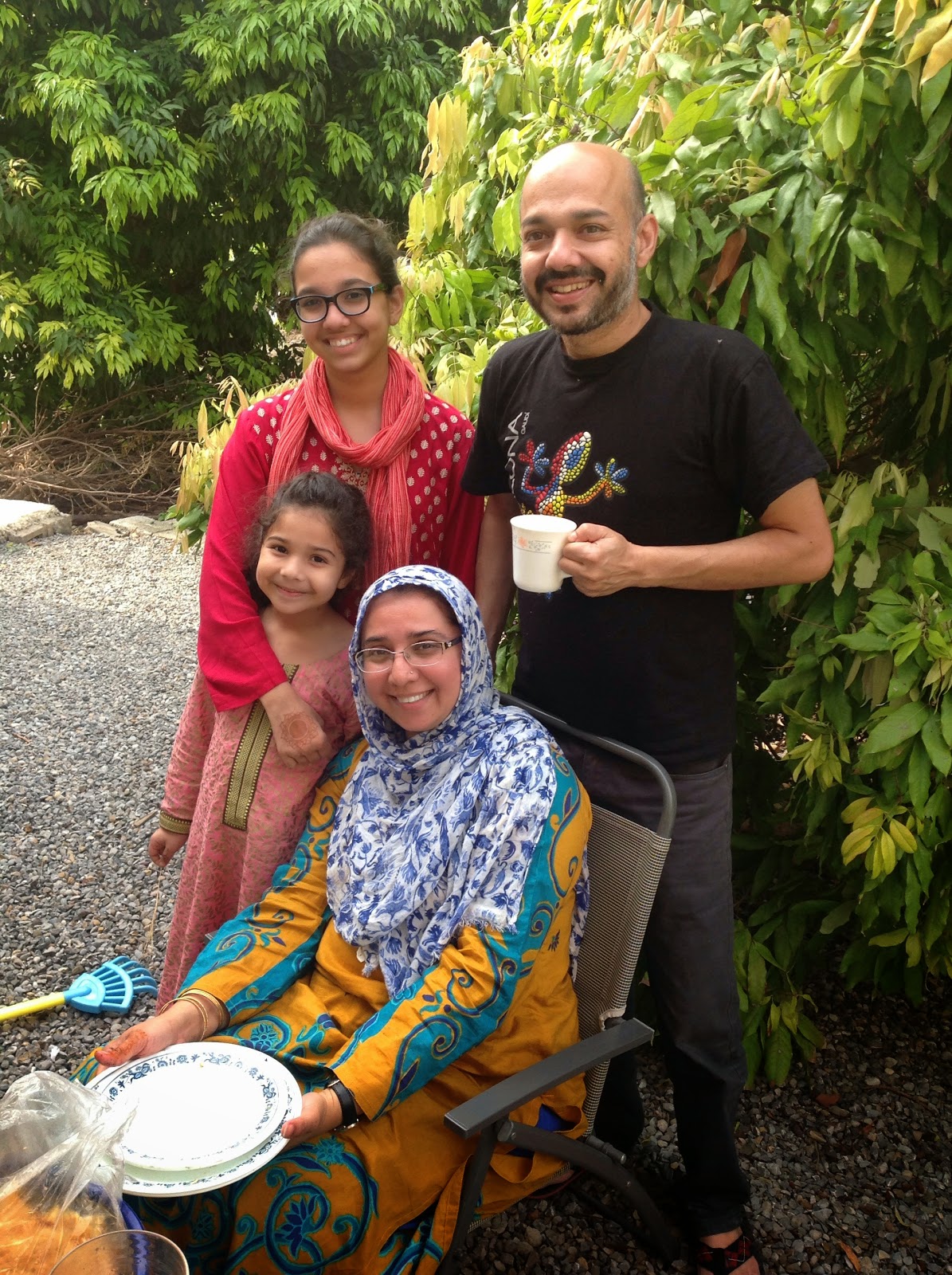
Sunday, 9 November 2014

Oranging of Oranges

Week 45November 3, 2014November 9, 2014

1.     Preamble:

In reference to the blog of previous week, we returned from Lahoe on Tuesday. We travelled some 900 Kms on the motorway both ways. The midway point is Bheira, where from going towards Lahore the citrus region of Sargodha starts and continues up until Sheikhupura, which is the rice growing region. We noticed the oranges (Kino) were all green and completely indistinguishable on 'all green' appearing trees. When we returned only 3 days later, they all were yellowing and very well identifiable. The story was identically the same at our farm where the 'Fruiter' citrus trees were presenting an altogether different look, with the yellow/orange fruit showing all over. The fruit on other kind of orange trees too were yellowing but the mandarin 'Early Fruiter' being always the first was visibly in the lead. Oranges come in different hues of red, yellow and orange. Here, we might mention, the orange was not named for the color but rather the color was named after the fruit. The word "orange" was a Western explorers mispronunciation of the old Tamil word for the fruit (aru-anju). Brought back to Europe, the fruit was called "orange" and anything with the same shade/hue was then referred to as having an "orange" color. 

Coincident with oranging of oranges, the wheat sowing season too has commenced around our farm in Khyber Pakhtun Khwa (KPK). The plots have been cleaned, tilled and seeds thrown. The rains of a couple of days earlier have made it appear logical and perfect. Coincident with the harvesting of wheat in late April, it would be the time for pulling of garlic as well, which was sown almost six weeks ago on our own plot.

Starting this week, we will return to the oranges, about which we have already talked only four weeks earlier in the blog of the week: 41 (October 6-12, 2014). The first of these will understandably be none other than the Mandarin Fruiters.

2.     The Early Mandarin Fruiter:

As stated, the Mandarin Fruiters have been mentioned in this blog before. "It is a group name for a class of oranges with thin, loose peel, which have been dubbed "kid-glove" oranges. The name "tangerine" could be applied as an alternate name to the whole group, but, in the trade, is usually confined to the types with red-orange skin". This is how mandarins are described so adequately on the Purdue University Web page. For further reading, the page can be accessed at:

http://www.hort.purdue.edu/newcrop/morton/mandarin_orange.html


Here, we will suffice by showing only pictures of on the tree mandarins in our own farmhouse. These are far more expressive than any detailed article, from whatever reputable source may it be.

3.     The Initiation of Tandoor (Clay Cylindrical Oven):

Those who read this blog regularly, know how embarrassingly easily I move from one subject to other.  Ashamedly, this is the only way I can make good use of the limited space, available for this blog. We had already introduced (Week: 41, October 20-26, 2014) the "Outdoor Tandoor', the latest addition in our farmhouse. Our trip to Lahore of the last week delayed its inauguration. During the ongoing current week, we have put it to use however. Here are some pictures, which sum it up.


Among the preparations were the Garlic Naan. The Chicken Tikkas seen in one of the pictures were however baked on the adjacent 'Barbecue Stand'.

4.     My/Our Treasure Trove:

During our recent sojourn to Lahore, I/we collected following books. This treasure trove will hopefully keep me fully occupied for many weeks. Two of the books are in English. One on the subcontinent history and the other, a travelogue:


Two other books that I acquired are in Urdu. One of them is a novel, which has earned a French literary award and the other describing events and personalities, written by none other them Mustaq Ahmad Yusufi, a writer of considerable repute.


I plan to read these books in the coming weeks extending possibly into a couple of months. As I finish reading them, I would love to review them in this blog and share with all our well wishers. Here, I will briefly talk only about the first book: 'The Age of Wrath'. It is a an Indian history book, which describes the 300 years of Delhi Sultanate in the period between 1206 - 1526. The era starts with the rule of Sultan Qutub-ud-Din Aibak whose mausoleum is right in the centre of Lahore, which unfortunately I did not know about but would need to go to along with the much desired, Masjid Wazir Khan, hopefully not too distant in future.

Till the next week, it is wishing you Godspeed, as always.

Tuesday, 4 November 2014

November It Is


Week 44October 27, 2014November 2, 2014


We have moved into the month of November but mums (Chrysanthmums) birth flowers of this month are still not there to be seen and appreciated. During the current Moharram break, we (ourselves together with Saads) came over to Lahore to be with Hasans (our eldest son and his family) where it is somewhat warmer than our farmhouse in Taxila/Khanpur and the enchanting flowers of the month are more out of season here than there. We may not therefore talk about them, as I planned to do earlier. We now have been away from our farmhouse for more than half of the week and would stay in Lahore for at least one more day while the week itself has come to an end and the deadline for floating of this blog is over and gone. We may as such try to see a bit of Lahore while we are still here. There is of course no way of doing that better than through the lense of my iPad camera, which is always on my side, wherever we go. 

2.     With Hasans in Lahore:


3.     At Bagh-e-Jinnah:

Lahore is a city of gardens as much as it is the city of grand architectures of the Mogul period. We spent one day with Saad's (Inaya and Ne'ma) and Hasan's (Eemaan and Avizheh) children at Bag-e-Jinnah, which is one of the oldest and amazingly well kept gardens right in the centre  of the city. The garden boasts very old Alstonia Scholaris trees, also known as the Devil Tree. The trees are a glabrous evergreen, native to the Indian subcontinent. They may have been planted long ago and since have acquired gigantic sizes, some 50 to 60 feet high. They have furrowed greyish trunks, oblong stalked leaves upto 6 inches long and four inches wide, dispersed in 4 to 6 whols round the stem. The trees surrounding the similarly large white palace of a building, housing a library gives a serene and exceedingly impressive look to the area adjacent to the Lahore Zoo. 


The day was well spent and the children enjoyed if not more just as much as we the adults did.


4.     At Fortress Stadium:

Before winding up the day, we went over to the nearby Fortress Stadium, which is popular open space consisting of shopping centres, restaurants, cafes and entertainment areas besides a sports stadium. The Stadium is the site of the famous ‘National Horse and Cattle Show’ which is one of the most famous festivals of Lahore, which includes a display of livestock, but also many spectacular feats of horsemanship, tent pegging, dressage, camel dancing, racing, folk dances, pomp, pageantry, mass-band displays and grand fireworks in the evening at the advent of spring each year.


5.     The Bedan Road Amritsary Sweet Shop:

This time around, our sojourn to Lahore lasted three days, which besides spending a day outdoors was also consumed in enjoying the company and hospitality of Hasans and watching (on TV) the Pakistan cricket team scoring a test series win against Australia in Dubai. The sojourn ended but not before buying Patissa (Gram Flour Mithai) from the famous Amritsari Sweet Shop on the Mall/Bedan Road intersection. This particular sweet shop is famous for a very special variety of Patissa, which is very different from any other preparation of the kind.  It comprises layers of Patissa interspersed with brittle Gond (edible gum), which makes the sweet very crisp and tasty. When ever our Nana Abba and later all our elders including my father came to Lahore they used to buy Patissa from this shop. It as such goes into the tradition of our family never to return home without Patissa from this shop.


With sweet and at that very agreeable taste of Patissa in our mouths, it is a hearty good bye to Hasans and Lahore.

Tuesday, 28 October 2014

Warming up for Winter

Week 43October 20, 2014October 26, 2014

1.     Preamble:

On sharing of experiences and observations and not giving up at any stage in life:

"It seems more or less impossible but if you're just determined to keep going, you don't need to give up. Because if your subject is your own experience, then as long as you're having an experience you've got a subject," - Painter Sargy Mann, who has been blind for 25 years.

The flowering plant of the week is none other than Purple Queen' bougainvillea (Bougainvillea "Moneth purple queen"), which is the latest addition to our farmhouse. It is a stunning evergreen vine with papery, deep purple flowers that contrast with attractive dark green foliage. It is presently blooming with most attractive flowers and is planted in a large clay pot, placed aside a pillar at the entrance of our farmhouse. 


Although the signs or indications of autumn are there, effects are not visible yet. The nights are cool and the days are bright and warm but the tree leaves are not falling yet. Although we don't have the trees the likes of 'Sugar', Red' or the Japanese Maples neither do we have the Aspen or Bald Cypresses, none of our own trees be they the Silver Maple or Silver Oak are changing colours or shedding leaves. I quite know, they don't and therefore won't. Fall is not therefore as colourful here in Khanpur as it may be at several places along the Margallas in Islamabad. Some of our trees such as the Cassia Nodosa, Cassia Fistula and the Rangoon Vine get barren of leaves at the fag end of winter just before spring, they maintain their green dresses even though visibly worn out, all through the coldest of winters. Our Lychee and Citrus fruit trees never show any effects of autumn but Apricot, Plum and Peach trees do shed leaves in Fall, which they haven't as yet. The Grape Arbor too is still wearing its green canopy and until it gets bare of leaves, the fall for us may not be considered to have set in. This blog will keep a record of the visible effects and keep its readers informed as and when it happens but not as yet.

Since the sowing season has started and we accordingly have already sown garlic, our traditional main crop  and other winter season vegetables such as radishes, turnips, broad beans, sugar snap peas and spinach, some of which such as red radishes have already started producing, we will devote this edition of our blog to the peas. We have planted both the ornamental i.e., the Sweet Pea (Lathyrus odoratus) and the edible (Pisum Savitum) varieties, as we normally do. As the seedlings have already started coming out, we will talk about our past experience with them and the new heirloom variety, the seeds of which we had received from our well wishers earlier this year.

2.     Sowing and Propagating Peas:

Peas are a cool-season crop. They come in three different varieties. They are: Pisum sativum which includes both garden peas (sweet pea, inedible pod) and snow peas (edible flat pod with small peas inside) and Pisum macrocarpon, snap peas (edible pod with full-size peas). This year we have planted both the edible and inedible peas at our farm both occupying sunny locations, facing the sun all the day long. However, here we will only talk about the cooking (edible) peas.

Except for the first year some four years earlier, our green peas have never done well. Although, we always used seeds from reputable foreign suppliers, our entire crop used to develop the Powdery Mildew fungus (Erysiphe Polygoni). The initial symptoms consist of tiny slightly discoloured spots on the upper surface of leaves. The fungus is seed-borne. It is recommended too use certified disease free seeds and sow them early. This year we got the seeds from two different foreign suppliers and planted them at locations, which receive direct sunlight.
2.1.   Edible Green Peas (Pisum Sativum):

During this season we have sown green pea seeds of three different varieties. These are:  Sugar Snap Peas, Pea Shelling (Dwarf Green Pea) and Fothergill's Lincoln Homestead. All the three happen to be Heirlooms (cultivar of special value handed on from one generation to another).

The Snap peas may grow to two metres (6.5 feet) or more, but more typically are about 1.3 metres 
(about four feet). They have a vining habit and require a trellis or similar support structure. The seedlings have just appeared. The Dwarf variety is an English heirloom. It is a favorite variety for home gardeners and promises to produce loads of 4-5" pods full of plump, sweet, dark green peas on 30" plants. Double pods set heavily at the top of the plant for easy picking. Let's look forward to it!


Read more : 
http://www.lowes.ca/seeding/mr-fothergills-peas-lincoln-homesteader-seed-packet_g1451426.html

3.     Citrus Musambi (Sweet Orange):

We have previously described in this blog various citruses e.g., Grape Fruit, Redblood Oranges and Kinow. This week we will talk about another citrus 'Musambi' a couple of trees of which too exist at our farm. Mosambi has a sweeter taste similar to orange. It is not acidic in spite of belonging to the citrus family. Mosambi or sweet lime can be easily recognised from a circular signature on the lower portion of each fruit.


4.     New Addition Around Farmhouse:
4.1.  The Tandoor:

One of the new items that has been installed only this week around our farmhouse is a Tandoor (clay
cylindrical oven) out in the open near the barbecue stand. Besides the flat bread that is traditionally prepared in Tandoors, it can be used for a variety of other allied purposes such as preparing chicken tikka and Sajji but more so for family gatherings, listening and telling tales of the old, around it during the cold winter evenings.


Note: This week's blog has unduly been delayed. I must therefore wind it up wishing the readers Godspeed.

Sunday, 19 October 2014

Merry Marigolds

Week 42October 13, 2014October 19, 2014

1.     Preamble:

“I’m so glad I live in a world where there are Octobers."

 ― L.M. Montgomery, Anne of Green Gables


We are now midway in the month of October and celebrating one last autumnal hurrah before the black and white silence of winter sets in. As the night time temperatures are now dipping below 15 C, our quilts and blankets for the nights are out but the woollies for the day time are just but out (max day time temperature: 25 C). The garlic scars (cloves) having been planted (last week of September) their green shoots have just appeared. The marigold flowers, the saplings of which too were planted in mid September have started flowering. It is now time to plant spring flowering bulbs and cool season vegetables. This issue of our blog covers just that.

2.     Fall Flowering Marigolds (Tagetes Erecta):


The Marigolds (annuals) are great plants for cheering up any garden. Broadly there are two geniuses which are referred to by the common names, Marigolds (Tagets) and Calendula. While Calendula.     (October Birth Flower) can be grown in spring, the marigolds are grown in autumn. The Tagets include African Marigolds and French Marigolds.  Some of the largest marigold flowers are varieties of the African, or Aztec, species (Tagetes erecta). Although native to Mexico and Central America, this species is most often commonly called African marigold (Aztec marigold, American marigold and big marigold are also sometimes used). Big marigold may be the best descriptive name because plants are noted for their large flower heads.


The marigolds planted at our farmhouse are of the African variety, the flowers of which are double petals with blooms that can be 5 inches across, but generally are 3 1/2 inches. The plant grows to a height of 12 to 14 inches. 

In India and Sri Lanka bright yellow and orange Marigold flowers are used in their thousands and placed in garlands and to decorate religious statues and buildings. They are also used as offerings and decoration at funerals, weddings and other ceremonies.
Read more:
http://www.specialtyproduce.com/produce/Marigold_Flowers_6604.php


3.     Sowing for Cool and Spring Season:
3.1.  Spring Flowering Bulbs and Cool Season Annuals:

Spring-planted bulbs produce some of the most dramatic garden colours with minimal effort. Tuck them among your perennials for a traffic-stopping summer display, or create a special bulb corner like ourselves. Many of these bulbs are ideal in containers, where they can be used to liven up porch. Among the flowering bulbs we have just sown are the Tulips, Lilies, Irises, Gladioli, Daffodils, Hyacinths and of course Narcissuses. While Irises can be planted in sunny locations, others like Tulips and Hyacinths prefer shady corners. To avoid strong direct sun, we have sown them under a tree covered corner, where we succeeded to find them blooming last spring. Some of these specially tropicalized bulbs were brought to us from Holland Others were sent to us by our relatives in Canada. We will remember to thank them all when they bloom this spring. 


In addition to bulbs, the seeds for cool season annuals e.g., Pansy, Viola, Calendula and Dahlia too were sown for growing saplings before planting out in the open.
Read more:

3.2.    Cool Season Vegetables:


During September cool season seeds for such vegetables as radish, Spinach and Turnips were sown of which red radish are just ready to be pulled out. The Peas were sown this week and they have just started sprouting. We will sow seeds of lettuce, parsley, cauliflower and Cabbage soon.


4.     Khanpur Blood Oranges:

In the previous weeks we started talking about still to mature citruses. We have already introduced  grape fruits and mandarins. This week we will introduce Khanpur Blood Oranges. Some 20 odd trees of these oranges were planted by us soon after we moved into our farmhouse 5 years ago in September 2009. These trees have started bearing fruit since last year but still have a long way to go before they produce fruit full to the capacity. The oranges are still green and would take about 3 months to mature and ready to be plucked. 


The blood oranges tend to be a bit smaller than regular oranges, with a thick, pitted skin that may or may not have a reddish blush but generally looks like a regular orange from the outside – until, that is, it is cut open. The inside flesh of a blood orange is brilliantly dark pink, maroon, or even dark blood red. Hence, their name. Along with their lovely red colour, blood oranges tend to have a noticeable raspberry edge to their flavour.

The red colour in blood oranges is the result of anthocyanin, which develops when these citrus fruits ripen during warm days tempered with cooler nights. Anthocyanin is an antioxidant, and starts to develop along the edges of the peel and then follows the edges of the segments before moving into the flesh of the orange, so blood oranges can be lined or streaked with red instead of fully blood colored, depending on the season, when they were harvested, and their particular variety.
Read more:

Tuesday, 14 October 2014

Brutally Beautiful Garlic Creeper

Week 40September 29, 2014October 5, 2014

1.     Preamble:

The rains have not yet altogether ceased and the remnants of monsoon keep still returning with vengeance. Accompanied by hale, thunder and lightening, it rained without any warning on the night of Eid ul Adha. Our sacrificial animals were out, in the open. There was no cover for them and as such it was much too frightening for them as it was of concern to us. The goats could be pushed into the garage but the lone poor bullock (yearling) could not be helped much to our dismay.

We are now in transition from a brief period of fall into winter. This transitory phase sees a lot of climbing bushes and vines in bloom. Last week we talked about the blue (Thumbergia), the golden (Allamanda) and the orange (Hummingbird) trumpet vines. This week we will look at the Garlic and Rangoon Creepers, which too are blossoming these days. Previously these vines respectively were erroneously mentioned as 'Beauty Vine' (actual name: 'Garlic Creeper') and 'Panoramio Vine' (actual name: 'Rangoon Creeper'). (Ref. Blog of Monday  9 June (Week: 24). The error is amended  here under by describing these two bushy creepers in detail.
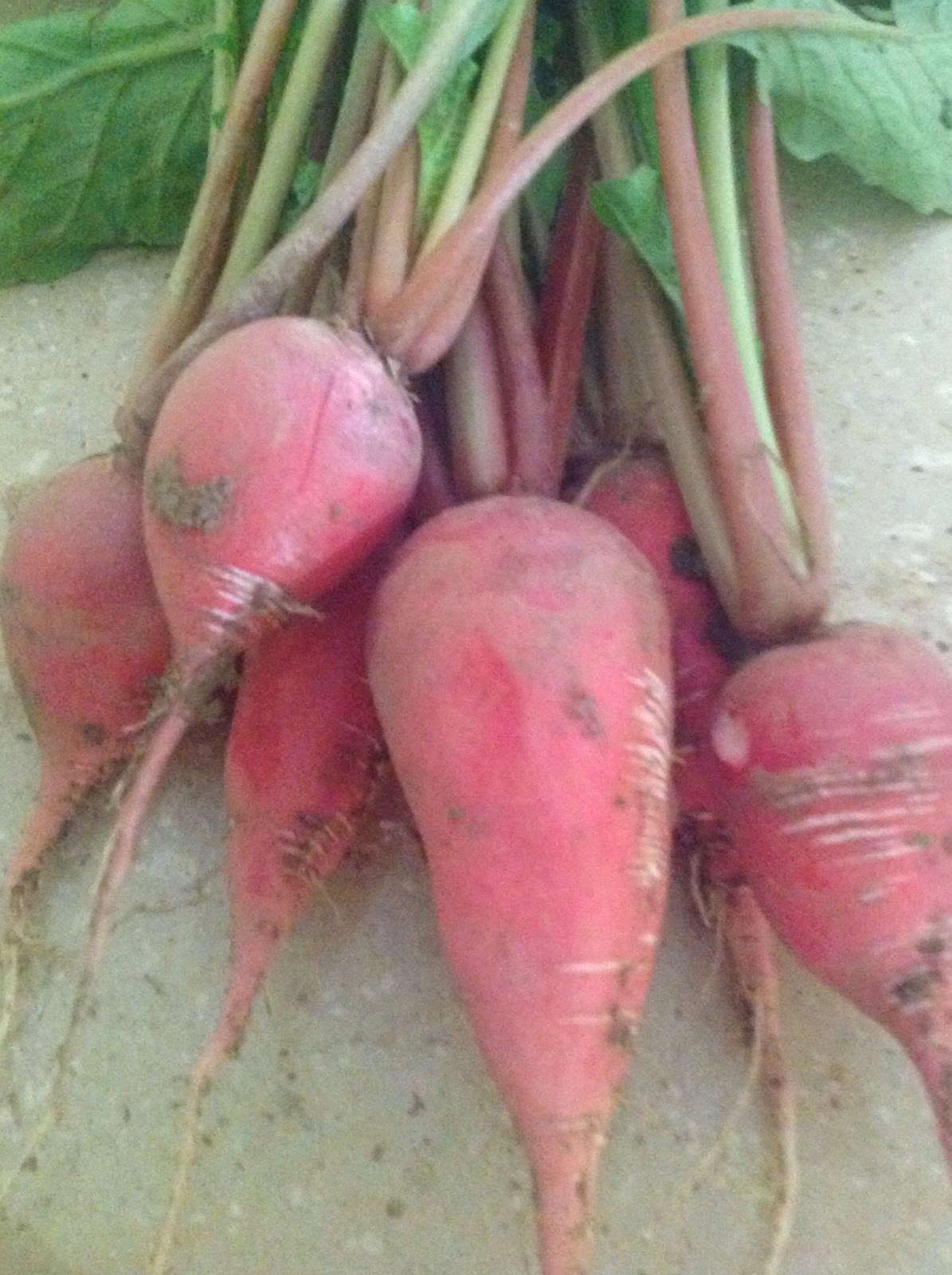
As Eid ul Adha was celebrated in Pakistan on Monday the 6th of October, the blog of this week has been overly delayed, which is regretted. As usual all our sons and their families minus Omars, who were with us on Eid ul Fitr, assembled at the the farm for the celebrations. It was a joyous occasion as Tahas too came from Toronto to be with us. There was much feasting and joyful partying to our immense happiness. We enjoyed as did every one else. This blog as such also contains a pictorial of the get to gather under the heading family matters.

2.     The Garlic Vine (Mansoa Alliacea/Pseudocalymma Alliacea):

The Garlic Creeper (Other names of this plant include - Mansoa alliacea, Pachyptera hymenaea, Pseudocalymma alliacea and Cydista aequinoctialis) is native to Amazon rain forests. The name is derived because the leaves when crushed smell of garlic. The smell is because it contains sulphur compounds like alliin and allyl sulphides that the garlic has. The natives of Amazon call it Ajos Sacha and use its leaves as a condiment to flavor their food. To the indigenous tribes of the Amazon basin it is a well-used and well-respected plant. Most consider the plant to be magical or spiritual, capable of driving off evil spirits, and bringing good luck. Leaves of this stunning tropical vine are The entire plant is used in nature medicine as a treatment for colds, flu, fever, arthritic and rheumatic pain and smokers cough. Crushed garlic vine leaves are also considered as an effective mosquito repellent.

The Garlic Creeper planted at the edge of of our front lawn along the boundary wall is a beautiful ornamental vine with opposite leaves divided into two ovate leaflets. The flowers are funnel shaped and purple to pale lavender to white, which become lighter as they age.The showy flowers are a real draw,  they start off as a deeper purple, then get more pastel, so there is a nice combination of different shades on the blooms at  one time, which is pretty indeed.


The above pictures were taken when the plant first bloomed just before Eid ul Adha. The change in colours and shades is clearly apparent and obvious in another set of pictures taken only a couple of days later as can be seen here under:


The Garlic Creeper, which actually is a shrubby vine, can grow up to 12 to 14 feet and is propagated from cuttings. It climbs with the help of its long tendrils. It is usually used to decorate the fence, trellis etc., The plant needs to be trimmed after each flowering season. The evergreen garlic vines bloom twice a year in Autum and Spring. 

Read more:
http://www.itslife.in/gardening/creepers-gardening/garlic-creeper
http://www.jagtapnursery.com/plants/climbers/garlic-creeper-lasun-vel-480.php
http://truthneverkills.blogspot.com/2010/10/garlic-vine.html
http://nurserylive.com/buy-climbers-creepers-plants-online-in-india/garlic-creeper-mansoa-alliacea-plants-in-india
http://www.orchids-flowers.com/tropical-flowers/garlic-vine-mansoa-alliacea/
http://www.rareflora.com/cydistaaec.htm

3.     The Rangoon Vine (Quisqualis indica):

The Rangoon Creeper is also called Burma Creeper and Chinese Honeysuckle. It is an extremely spectacular vine that blooms throughout the summer. When in full bloom, it is covered with large trusses of tricolored flowers that are very showy and pleasantly scented. The flowers have many variations of color, depending on how old they are. Over about a 3 day period the flowers starts out white, turn solid pink then dark pink and purplish red, then bright red on maturity.The foliage itself is also very attractive - bright green elongated leaves fill in to form dense lush greenery covered with flowers.


We have a couple of these vines at our farmhouse. Particularly attractive are those climbing in front of the pergola verandah facing our living area. Those provide the much needed sun shade in summer and allow the sun to come through in winters, when they shed their leaves.The name of the vine is from the Latin quis, "who", and qualis, "what". This name was given by the early botanist Georg Eberhard Rumphius as an expression of his surprise at the variability of the plant's growth and flower colour.

Read more:
http://www.floridagardener.com/pom/Rangoon%20Creeper.htm
http://www.jaycjayc.com/quisqualis-indica-rangoon-creeper/

4.     Family Event:
4.1.  A Pictorial of Eid ul Adha Congregate:


,

5.     Point to Ponder:

During the week preceding Eid ul Adha, I started reading, 'Kim', a novel published by Rudyard Kipling over 100 years ago. The author's thoughts interpreted by Morten N. Cohen in the Introduction  of the novel, are worth taking note of:

'This is a brief life, but in its brevity it offers us some splendid moments, some meaningful adventures. Savor the moments as they come, enjoy the adventures and relish freedom while you have it.'

On this note, I close this edition of the Blog.

Godspeed.